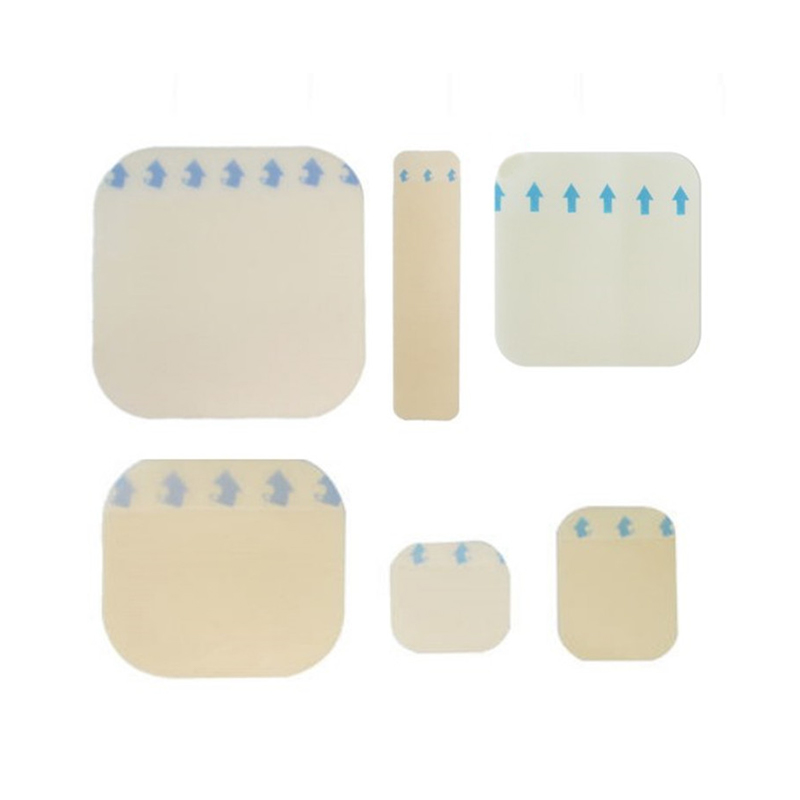
Three quotations for the same 40 mm × 40 mm hydrocolloid patch land in your inbox: USD 0.06, USD 0.09 and USD 0.14 per piece. All three suppliers say "hydrocolloid, PU backing, 0.4 mm thick". None of them is obviously wrong, and yet the cheapest quote is the one most likely to generate returns six months later.
The gap almost never comes from labour. It comes from coating weight, adhesive chemistry, liner choice, die-cut tolerance and how much of the process the supplier actually owns. Buyers who compare only unit price are effectively comparing three different products that happen to share a category name.
The practical rule: fix the construction on paper first, then compare price. Everything below explains how to do that without a materials science degree.
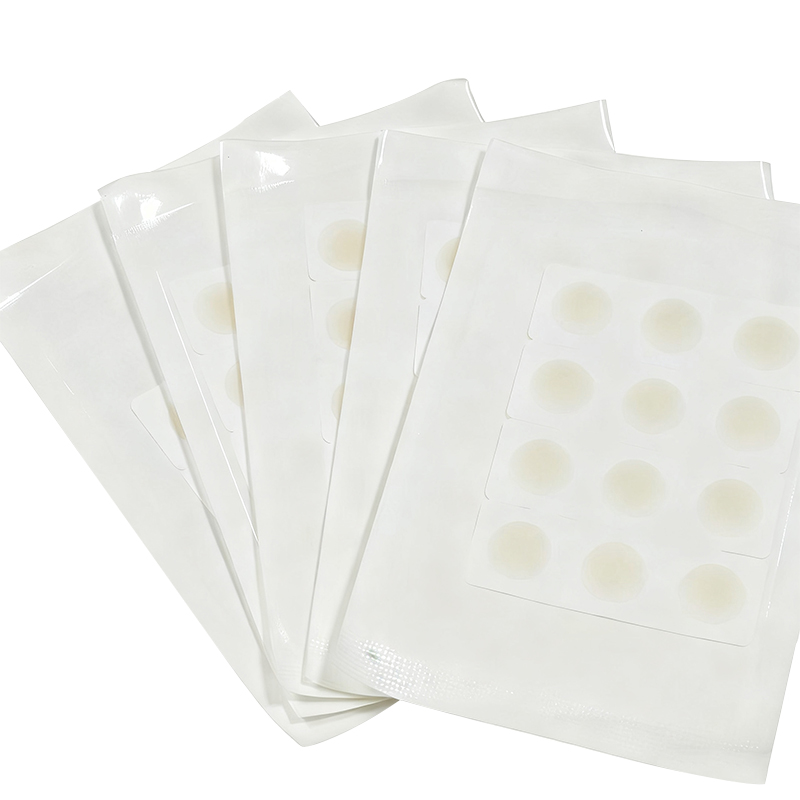
A hydrocolloid is not one material. It is a dispersion of absorbent particles, usually sodium carboxymethyl cellulose with optional gelatin or pectin, inside a thermoplastic elastomer matrix with tackifying resin. That compound is coated onto a polyurethane film and covered with a release liner, then die-cut, pouched and possibly sterilised.
Each of those layers is a decision. Two suppliers quoting identical headline specs can be shipping constructions that behave nothing alike: one swells to three times its thickness in 24 hours and stays put, the other barely moves and lifts at the edges after a shower. If you want the mechanism in more detail, this explanation of how a hydrocolloid bandage works is a useful primer to share with your product team.
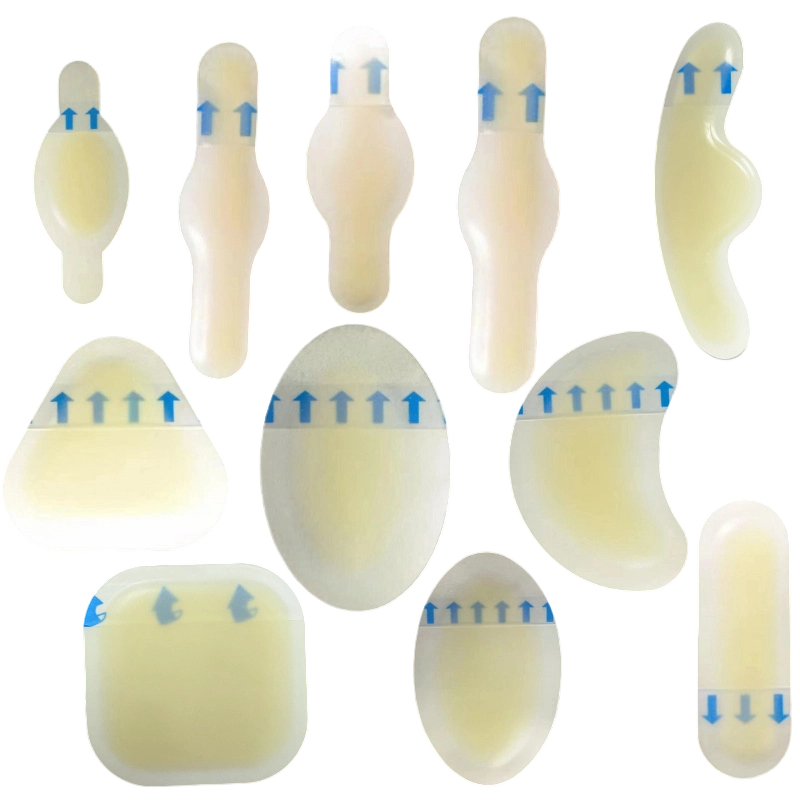
The same master roll also feeds very different product lines. An acne patch, a heel blister patch and a sacral dressing may share a chemistry but differ entirely in converting, thickness and packaging. That is why the supplier's converting capability matters as much as its formulation.
When you shortlist manufacturers, find out which tier you are actually talking to. The commercial implications differ sharply.
Buying from Tier 1 means you still need to arrange coating, cutting and pouching elsewhere, and you carry the interface risk. Buying from Tier 3 costs more per unit but gives you a single signature on the certificate of analysis and one party to call when edges lift in the field. For most brand owners and distributors, Tier 3 is the lower-risk route until volumes justify vertical integration.
Most sourcing disputes trace back to a spec that was never written down. The table below lists the parameters worth pinning into your request for quotation, with the ranges commonly seen in medical and personal-care grade production.
| Parameter | Typical options | Why to lock it down |
|---|---|---|
| Coating weight | 300–600 gsm | Drives absorbency and cost; a ±10% drift shows up as edge lift in warm conditions. |
| Elastomer and tackifier base | SIS or PIB blends | Sets initial tack, cold flow and residue left on skin after removal. |
| Absorbent phase | CMC, gelatin, pectin ratios | Controls swelling rate and whether the gel stays cohesive when saturated. |
| Backing film | 25–50 µm PU, matte or glossy | Affects breathability, drape on curved surfaces and printability. |
| Release liner | PET 75–100 µm or coated paper | Determines die-cut stability and the force needed to peel the patch free. |
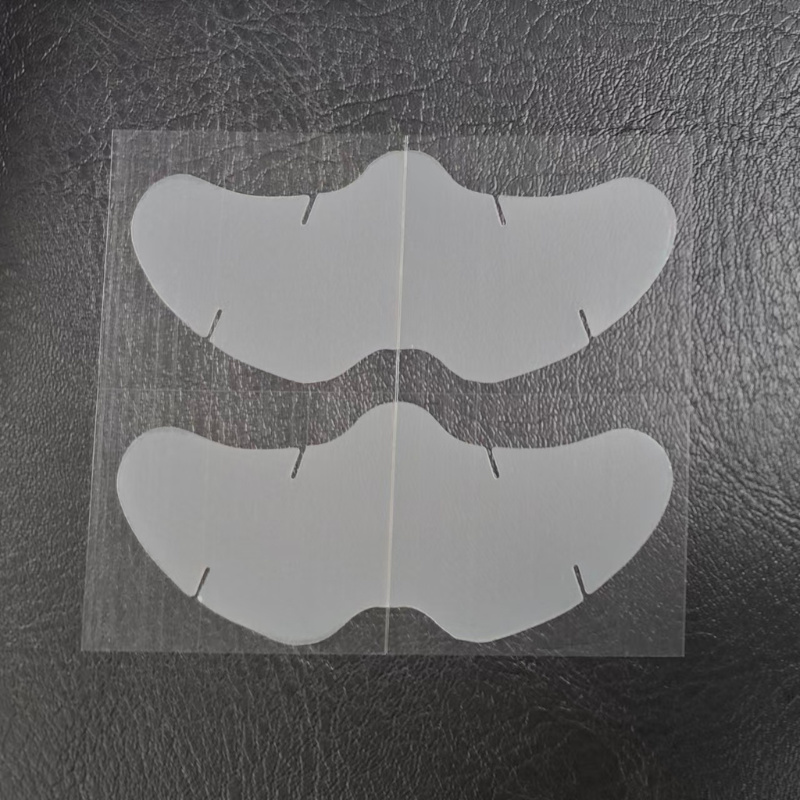
| Die-cut tolerance | ±0.3–0.5 mm | Matters on nose strips, sacral shapes and any patch applied to a joint. |
| Sterility route | EtO sterile or non-sterile | Changes the claim you can make, the shelf life and the release testing. |
| Packaging format | Paper-plastic pouch, foil pouch, carton | Moisture barrier decides whether a two-year shelf life is realistic. |
Two of these deserve extra attention. Coating weight is the single easiest number to verify on incoming goods with a micrometer and a balance, so put a tolerance in the purchase order rather than a target. Liner choice is the usual culprit behind complaints that "the patch tears when I peel it" — a paper liner that performs well in a dry plant can grab aggressively in humid climates.
A sample tells you how a patch feels. A documentation package tells you whether you can sell it in your market. Ask for both at the same time, because a supplier that cannot produce the paperwork quickly usually cannot produce it at all.
One nuance worth raising early: an acne patch sold as a cosmetic in the EU follows a different regulatory path than the same patch sold as a medical device. Many factories can support both, but the test lists and labelling are not identical. Ask which route the factory works with most often, and check that its answer matches the market you are entering.
Custom work usually covers shape, colour, thickness, tack, absorbency and packaging. The programmes that run smoothly are the ones where the brand supplies a drawing with corner radii and a tolerance, not a reference photo. A die can be cut to almost any outline, but a sharp corner on a patch that sits on the nose or the heel will curl regardless of how good the adhesive is.
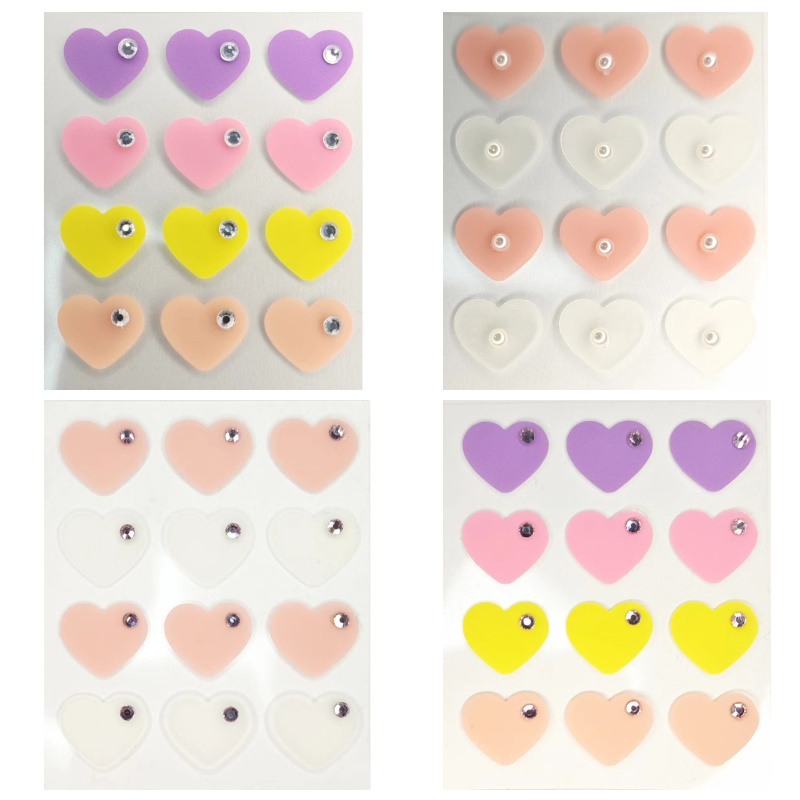
If your line includes acne care, the range of formats now available is wider than most buyers expect, from transparent and coloured patches to holographic and decorative finishes; the acne patch product range shows how much of the differentiation sits in appearance rather than chemistry.
 Custom Hydrocolloid Acne Patches for Private LabelCustomizable acne patches with selectable patterns, colors, shapes, thicknesses, and packaging, suited to brand-specific or themed private-label ranges.View Product →
Thickness is the other common sticking point. Ultra-thin constructions sit flatter and read as almost invisible on the face, while standard thickness gives more absorbency for exudate. A dressing that works on the sacrum is usually the wrong choice for a cheek, and vice versa.
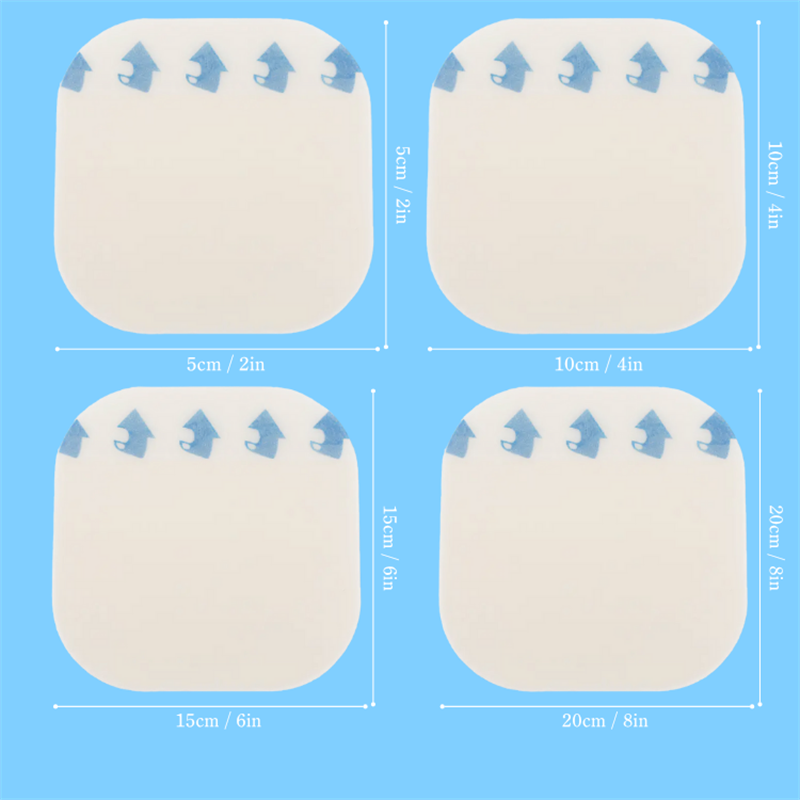 Ultra-Thin Borderless Hydrocolloid Wound DressingUltra-thin, edge-free hydrocolloid dressing for superficial and chronic wounds, with multiple sizes and shapes for flexible cutting and application.View Product →
Blister and friction applications bring their own requirements: a thicker compound, a bevelled edge and a shape that follows the contour of the heel or toe. These are converting decisions as much as formulation ones, which is why a supplier's existing tooling library can cut weeks off a launch.
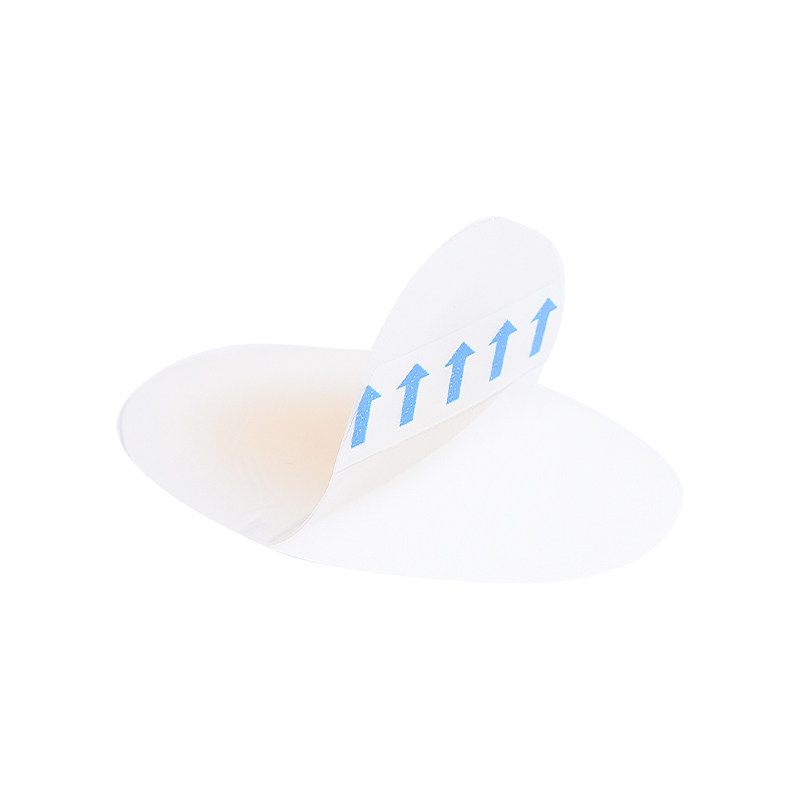 Hydrocolloid Blister Patches for Foot Friction ReliefWater-resistant, breathable hydrocolloid patch shaped to follow foot contours, helping reduce friction discomfort and absorb exudate; customizable in size and thickness.View Product →
Quoted lead times vary widely, and the numbers below reflect a common pattern across export-oriented manufacturers. The spread is not inefficiency; it reflects how much of the line has to be set up for your order.
Indicative calendar days from confirmation to shipment
Inside a 20–25 day custom run, roughly a week goes to tooling and print setup, a week to material scheduling for the specific compound and liner, and the remainder to coating, die-cutting, pouching and quality release. If your launch date is fixed, the lever with the most effect is approving artwork and drawings before the sample stage, not chasing the factory afterwards.
You do not need a full audit to separate a capable supplier from a confident one. A single structured sample evaluation will usually tell you what you need.
Run this once and you will have a supplier scorecard that is far more useful than a price list. The manufacturers worth keeping are the ones whose numbers agree with yours, whose documentation arrives without being chased, and who tell you when a requested construction will not work — before the tooling is cut rather than after.
contact us
Don't hesitate to contact when you need us!

Contact Information
NO.3 Jinshui Road, Xiwu Street, Fenghua District, Ningbo, ZheJiang, China.
+86-18158557875





 English
 中文简体
 русский
 Español