A dressing that lifts and curls at the edges after 36 hours on a sacral pressure injury rarely fails because of the name printed on the pouch. It fails because the adhesive coat weight, the backing film's moisture vapour transmission rate or the absorbency of the core did not match the wound underneath. Buyers usually discover this after a trial order; clinicians discover it at the bedside.
Advanced wound dressings are easier to buy once you stop treating them as upgraded gauze and start treating them as engineered moisture-management systems. Their job is narrow and measurable: keep the wound bed moist, keep the surrounding skin dry, hold exudate away from intact skin, and come away without tearing new tissue. The practical order of decisions is to match the dressing family to the exudate level first, verify the numbers on the specification sheet second, and negotiate price last.
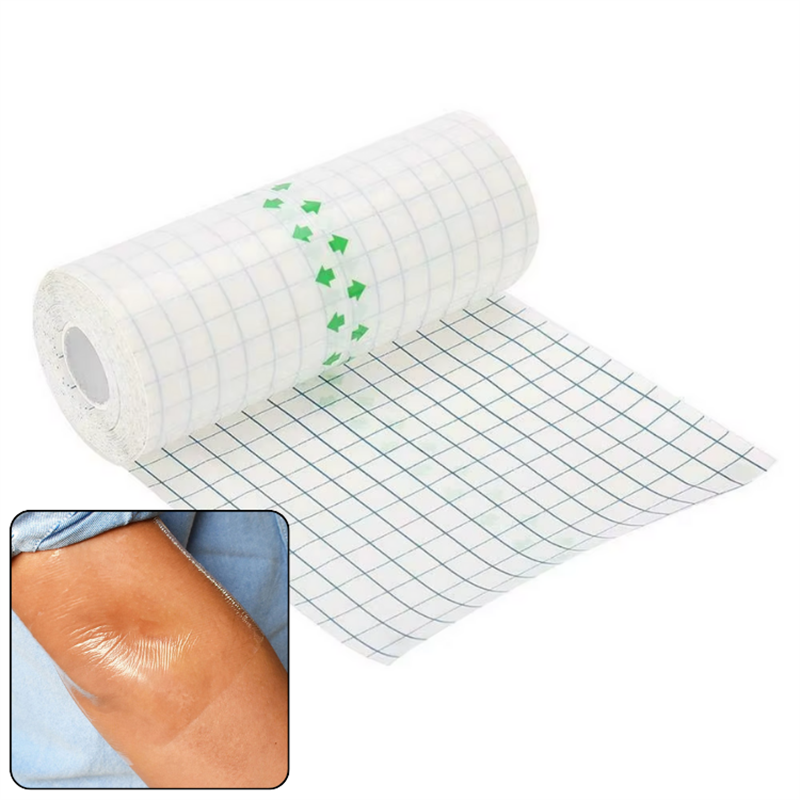
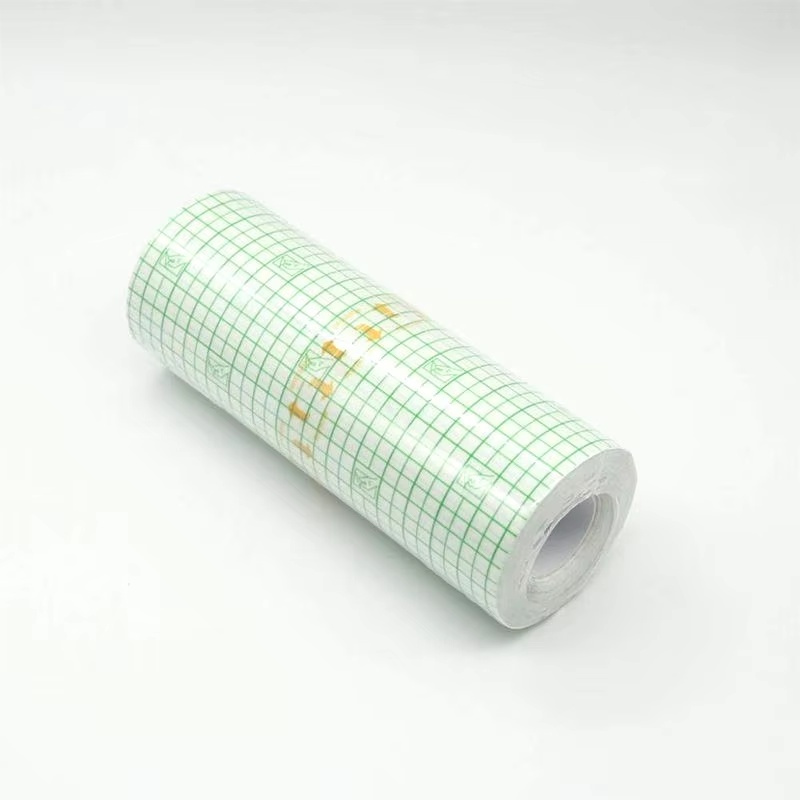
Gauze absorbs. It also dries the wound bed, sticks to new tissue and needs frequent changes, each of which interrupts healing. An advanced dressing changes the interface itself: a gel-forming hydrocolloid layer, a semi-permeable polyurethane film, a silicone coating, or a foam that holds fluid inside its structure and away from the periwound skin.
That shift has two consequences. Clinically, wear time lengthens and removal becomes less traumatic. Commercially, the specification becomes the product. Two patches cut to the same 4 cm by 4 cm shape can behave like different devices if one uses a thinner backing and 30 percent more adhesive coat weight than the other. "Advanced" is a functional claim, not a price band, and it should be verified with data rather than label wording.
Most catalogues sold under this heading draw from six or seven material families. They overlap at the boundaries, so the useful question is not "which is best" but "which is efficient for this wound, this skin and this wear time".
| Family | Base material | Exudate level | Common use | Specification that decides performance |
|---|---|---|---|---|
| Transparent film | PU film with acrylic adhesive | None to minimal | IV site securement, superficial protection | MVTR; adhesion to damp skin |
| Hydrocolloid | CMC particles in an adhesive matrix on PU film | Low to moderate | Pressure areas, blisters, small acne lesions | Gel-forming rate; coat weight; edge tack |
| Alginate | Calcium alginate fibre | Moderate to high | Cavity and heavily draining wounds | Absorbency in g/g; wet integrity after 24 hours |
| Foam | Polyurethane foam with film backing | Moderate to high | Leg ulcers, surgical wounds | Fluid retention under compression; MVTR |
| Silicone gel sheet | Cross-linked silicone | None (scar management) | Hypertrophic scars, fragile skin | Thickness; tack; conformability |
| Nonwoven absorbent | Viscose and polyester blend | Low to moderate | Post-operative cover, general ward use | GSM; linting; wicking rate |
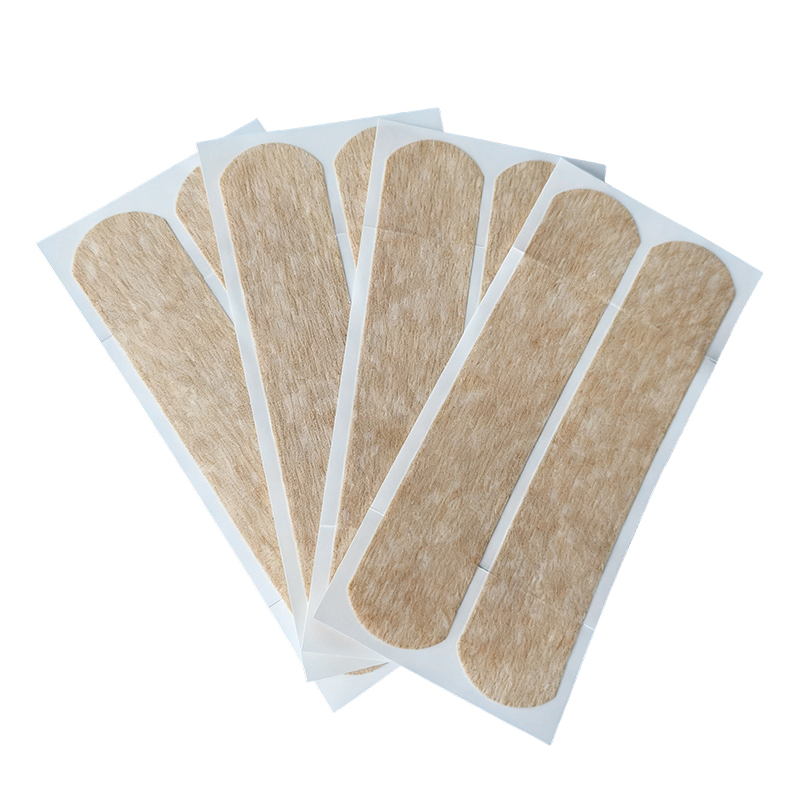
| Wound closure tape | Nonwoven or film strip | None (closure) | Small lacerations, incision support | Peel adhesion; breathability |
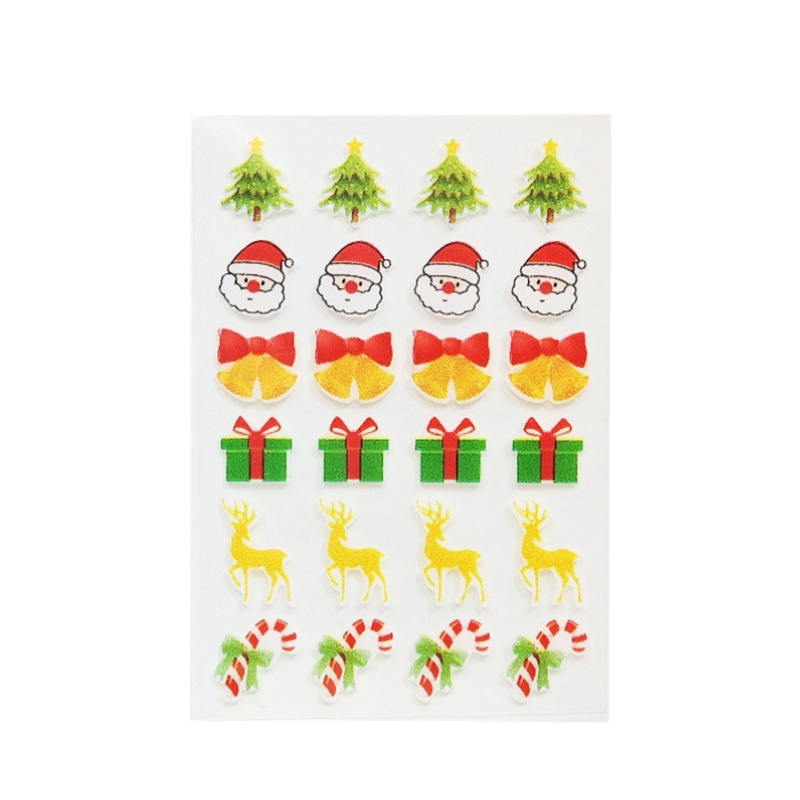
Hydrocolloids sit in the middle of that range. Particles absorb fluid and swell into a gel that keeps the bed moist, while the intact film at the edges holds the patch in place. It is the same mechanism that makes a hydrocolloid work on a blister and, at much smaller scale, on an acne patch. How fast that gel forms and how much residue it leaves behind depends on particle loading and the adhesive matrix, which is why how hydrocolloids interact with wound fluid is a purchasing question and not only a clinical footnote.
Thin constructions matter in the same way. A low-profile hydrocolloid sits flatter under clothing and around joints, resists rolling at the edges, and is easier to die-cut into small cosmetic formats.
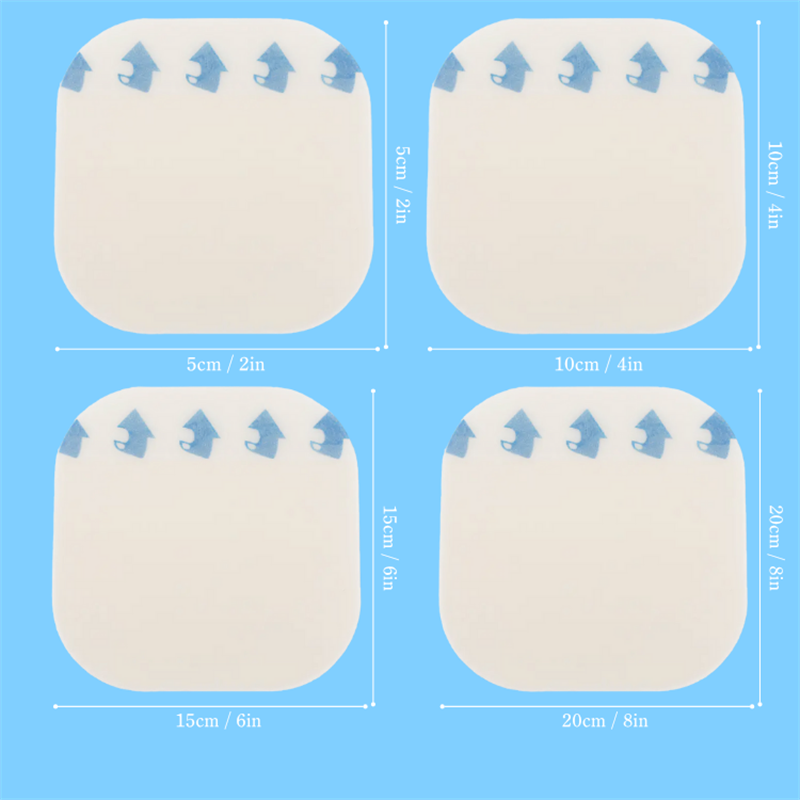 Ultra-Thin Borderless Hydrocolloid Wound DressingLow-profile, borderless hydrocolloid dressing that can be cut for irregular wounds and small cosmetic formats, with waterproof breathable film and gentle adhesion.View Product →
Nonwoven absorbent dressings remain the workhorse of high-volume wards because they are cheap, conformable and easy to stack in a procedure tray. Their performance is largely a function of fabric weight, and GSM selection for nonwoven dressings explains why a 40 g/m² cover and a 70 g/m² pad behave differently under the same amount of drainage.
The index below is a rough screening comparison of how much fluid each family holds before strike-through becomes a risk. It is a planning aid, not a specification, and the real number always comes from the supplier's test data.
Relative fluid-handling capacity (illustrative index, 1 = low, 5 = high)
Almost every field complaint traces back to a mismatch somewhere in this chart:
High-exudate wounds are where material choice saves the most nursing time. Calcium alginate fibre converts in contact with wound fluid into a soft gel that holds drainage in the dressing rather than on the skin, and it needs a secondary cover to stay in place.
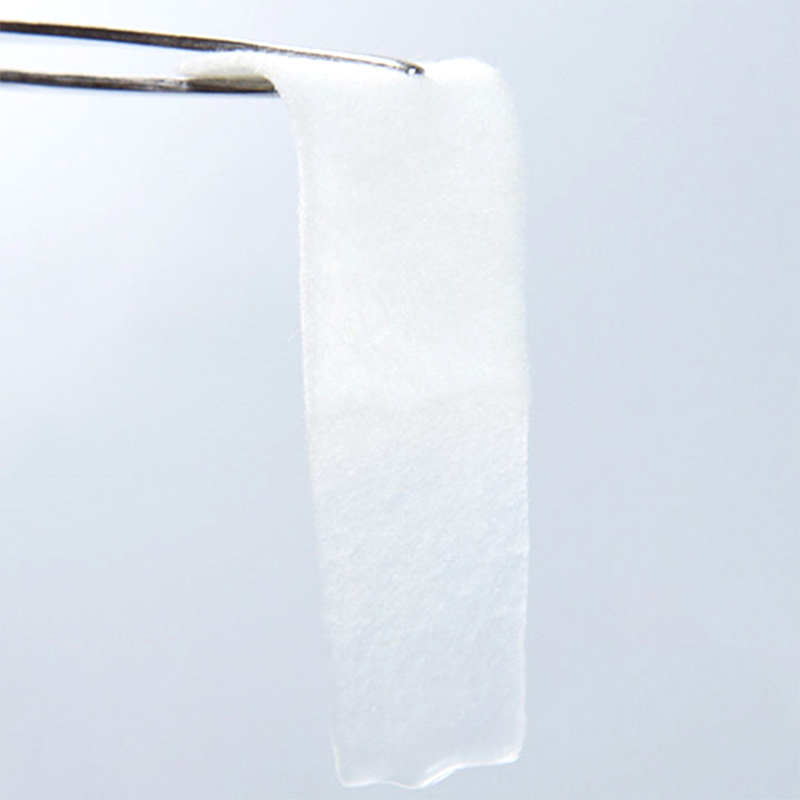 Calcium Alginate High-Exudate Wound DressingAlginate fibre dressing that gels on contact with exudate and absorbs up to 15–20 times its weight, suited to high-drainage wounds needing a secondary cover.View Product →
Silicone belongs to a different job altogether. Instead of managing fluid, it manages the interface: it adheres gently, lifts without stripping and can stay in contact with fragile or healing skin for extended periods, which is why it dominates scar management and paediatric use.
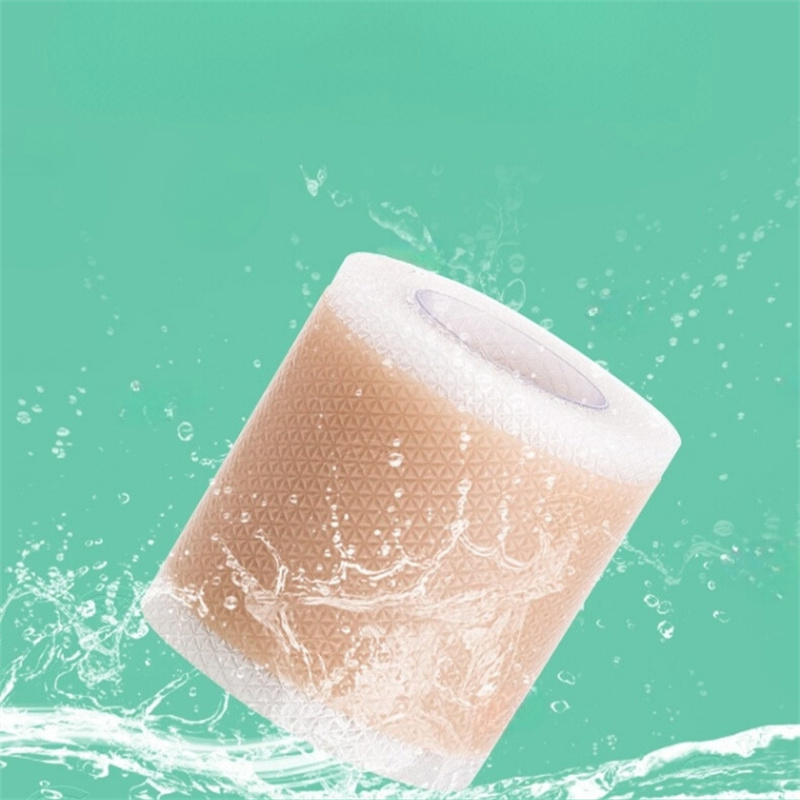 Medical Silicone Scar Patches and RollsSoft, washable silicone scar sheets and rolls that can be cut to fit and worn at least 12 hours daily to support scar hydration.View Product →
A dressing datasheet that lists only dimensions and a shelf life tells a buyer almost nothing. Six values predict field behaviour, and a supplier who cannot produce them is likely assembling rather than manufacturing:
Ask for accelerated ageing data behind the stated shelf life as well. A three-year claim printed on a pouch is a marketing statement until an ageing study supports it.
For a brand owner or distributor, supplier qualification usually costs more than the first order. Doing it in the right sequence avoids re-validation later:
Products that cross into cosmetic positioning, such as decorative acne patches sold in the EU, bring an extra layer of filing and labelling requirements. It is cheaper to raise that at the quotation stage than to relabel a container.
OEM work on dressings usually varies six parameters: shape, colour, thickness, adhesion, absorbency and packaging format, with paper-plastic pouches, foil pouches and printed cartons all common. Each of those is a real engineering decision, not a cosmetic one, because changing thickness alters MVTR, and changing colour adds a pigment that has to be cleared for skin contact.
Quoted timelines for a Chinese contract manufacturer with an established dressing line typically look like this:
Quoted lead times in days
The hidden cost sits in changes requested after tooling. New die geometry, revised artwork, a switched adhesive or a different sterilisation cycle can each trigger a re-validation, and the second sample round often costs more calendar time than the first. Freeze the specification before the tooling order and the schedule holds.
Field returns on advanced dressings cluster around a small number of causes, and each maps to a number a buyer can request:
Selection gets simple once the sequence is fixed: read the wound, choose the family that matches its exudate, confirm the units a supplier can prove, and only then talk about price per piece. A dressing that costs 20 percent less but needs an extra change every two days is not cheaper.
For buyers building a range rather than filling a single line item, the useful supplier is one that can move across the families on the same quality system, from a low-profile hydrocolloid to an alginate or a silicone scar sheet, and show the test data behind each one. That combination of breadth and documentation is what separates a manufacturing partner from a trading intermediary.
contact us
Don't hesitate to contact when you need us!

Contact Information
NO.3 Jinshui Road, Xiwu Street, Fenghua District, Ningbo, ZheJiang, China.
+86-18158557875





 English
 中文简体
 русский
 Español