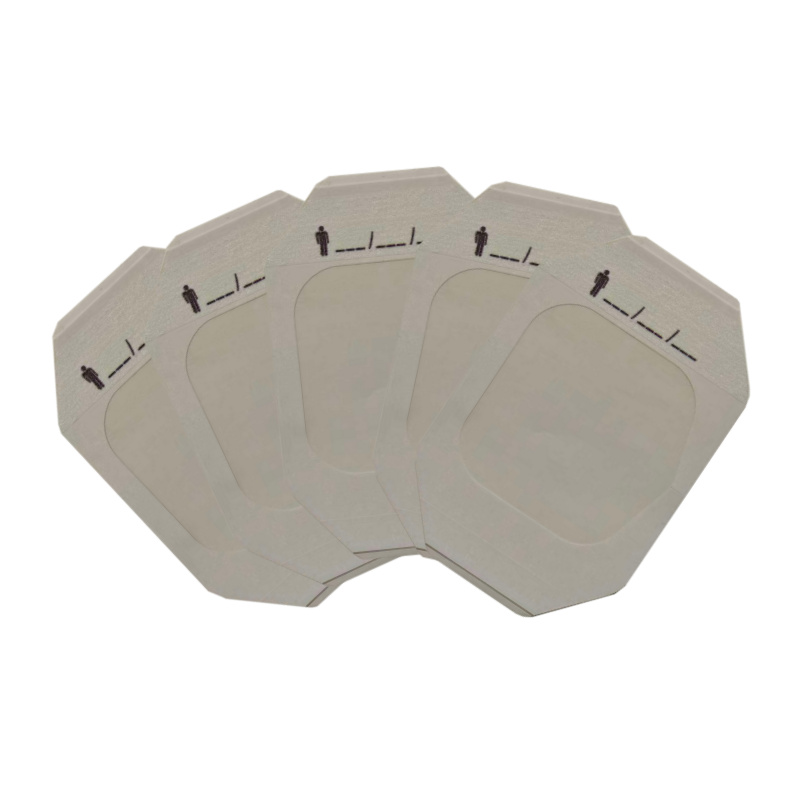
A procurement manager compares two quotes for the same line item: medical nonwoven dressing, sterile, 10 cm x 10 cm. The prices differ by 18%. Both samples feel soft, both are white, and both carry a CE mark. On a moderately draining wound, one stays intact for three days while the other lifts away in fibres within eight hours. Nothing on the label explains the gap.
That gap almost always comes down to two numbers that are easy to leave off a purchase order: basis weight in grams per square metre (GSM) and the web-formation method. Lock those two down first, and absorbency, linting, drape, converting options and unit cost all become predictable. Leave them open, and you are comparing two genuinely different products that happen to share a name.
Basis weight sets how much fibre sits under the wound. A 40 gsm spunlace carries roughly a third more fibre per square metre than a 30 gsm version of the same blend, and that difference shows up as higher fluid uptake, greater opacity and a firmer hand. Fibre is the largest single cost component in a nonwoven web, so a 10 gsm step up usually moves landed cost by a measurable margin.
Tolerance is where orders go wrong. A specification written as "40 gsm plus or minus 5%" permits anything between 38 and 42 gsm. Across a container load, that swing changes how much adhesive a laminate can carry, how the roll behaves on a high-speed converting line, and how the finished pad feels in use. Write the tolerance down and state the test method, normally ISO 9073-1.
GSM tells you how much material; formation tells you what kind. Spunbond polypropylene is extruded and bonded in one continuous process, giving high tensile strength, clean edges and very low lint, but little absorbency on its own. Spunlace, also called hydroentangled web, uses high-pressure water jets to entangle the fibres, producing a softer, more drapable sheet that wicks fluid and sheds almost no fibre. SMS sandwiches a meltblown barrier between two spunbond layers and is the usual choice where liquid strike-through must be blocked. Needle-punched webs are mechanically entangled into bulky structures above 100 gsm, for applications where padding and exudate capacity matter more than thinness.
Blend decides how the web behaves once it is wet. Polypropylene is hydrophobic by nature; viscose, cotton and wood pulp raise absorbency and soften the hand; a surfactant finish makes an otherwise water-repellent web wettable. What you exclude matters too. Latex-free, optical-brightener-free and chlorine-free grades are standard expectations for wound contact layers, and buyers increasingly ask for extractables data to prove it.
The variables interact, so it helps to see them mapped against one another before writing a purchase order. A practical walkthrough of nonwoven dressing types, GSM bands and selection criteria covers the same ground from a converter's perspective.
The table below summarises how the main constructions used in medical dressings compare on the four attributes buyers ask about most: weight, fluid handling, lint and typical role.
| Construction | Typical basis weight | Fluid handling | Lint tendency | Typical role |
|---|---|---|---|---|
| Spunbond polypropylene | 15-40 gsm | Low unless treated | Very low | Coverstock, backing, securement |
| Spunlace (hydroentangled) | 30-80 gsm | Moderate to high | Very low | Wound contact layers, absorbent pads |
| SMS | 35-70 gsm | Low, with barrier layer | Very low | Drapes, barrier components |
| Needle-punched | 100-400 gsm | High | Low to moderate | Padding, exudate management |
| Air-through or thermal bonded | 20-60 gsm | Low to moderate | Low | Soft comfort facing |
| Adhesive-coated laminate | Web plus adhesive and liner | Depends on the web | Depends on the web | Finished dressings, films, patches |
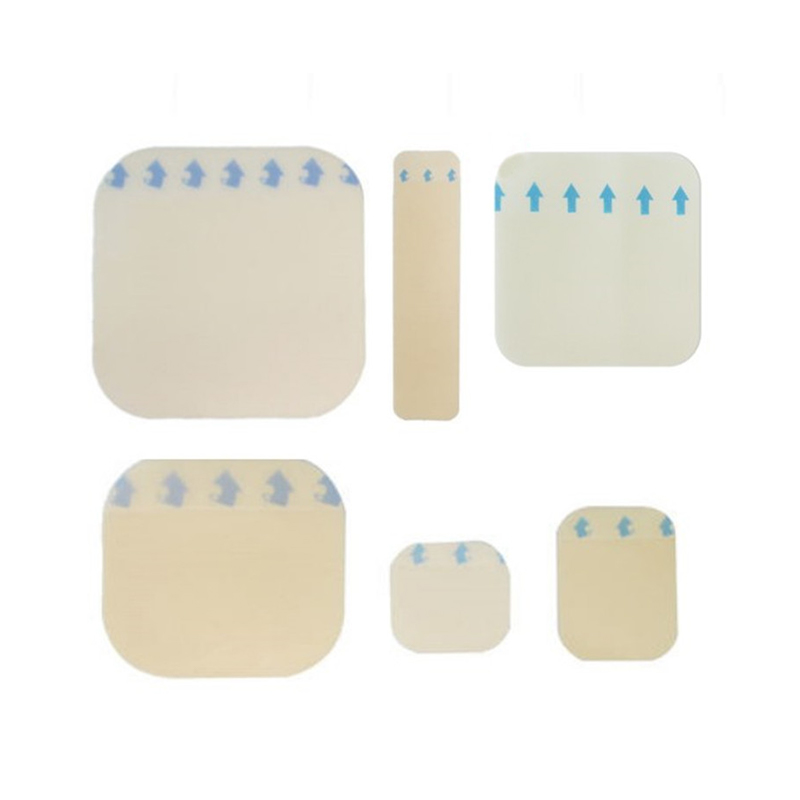
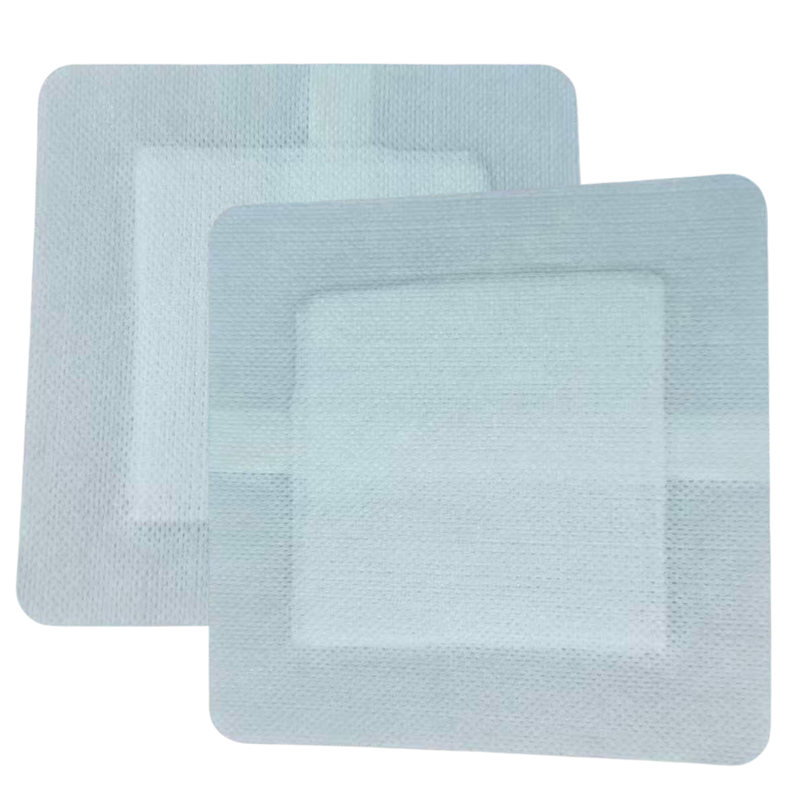 Non-Woven Medical Dressing with Breathable Fabric CoreLightweight breathable non-woven dressing for wound covering and exudate absorption, featuring skin-friendly adhesive and a customizable 15 x 15 cm size.View Product →
When the application is clear, the formation usually follows. Work down the branches below before requesting samples.
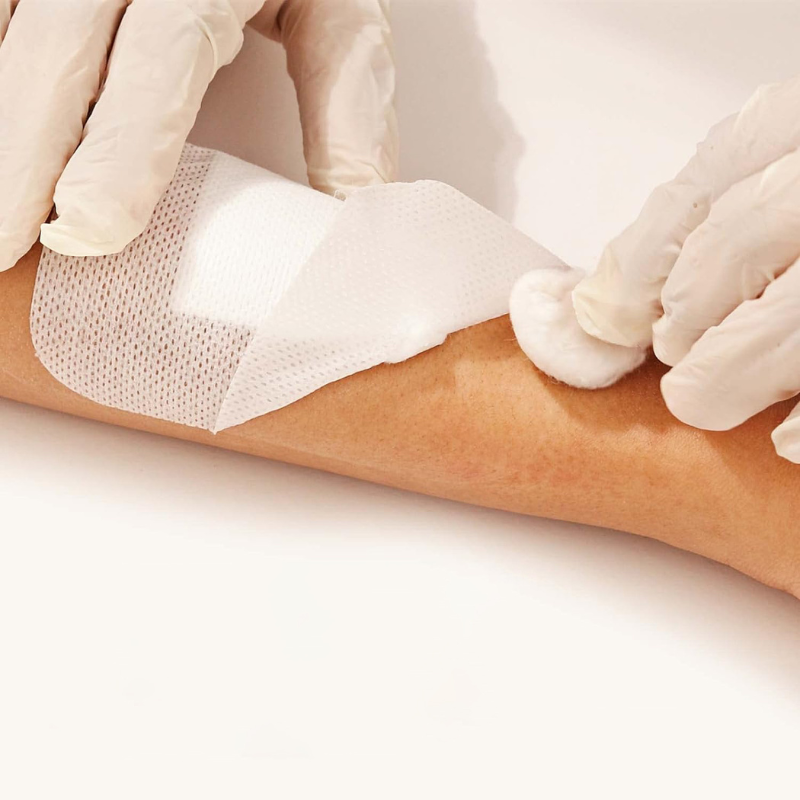 Spunlace Non-Woven Medical Dressing for Wound ProtectionSoft breathable spunlace dressing with absorbent layer and skin-friendly adhesive, offered in multiple sizes for wound covering, protection, and fixation.View Product →
The same web can leave a factory in several forms, and the form changes both the price and the converting options downstream.
Sterilisation should be chosen early, because it constrains material selection as much as packaging does. Ethylene oxide suits heat-sensitive webs and films and is the usual route for hydrocolloid and adhesive laminates; gamma is faster but can discolour some polymers and degrade certain adhesives. Whichever route is used, name the sterility assurance level in the specification, normally a one-in-a-million probability of a non-sterile unit. Packaging follows the sales channel: paper-plastic pouches for cost-sensitive bulk supply, foil pouches where moisture and light protection matter, and printed colour boxes for retail-facing lines.
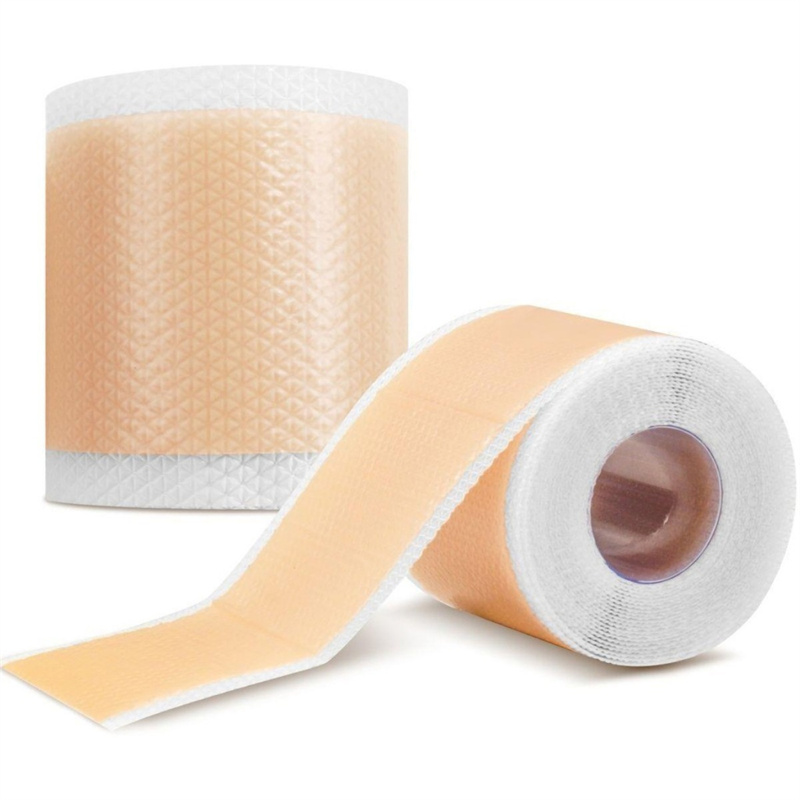
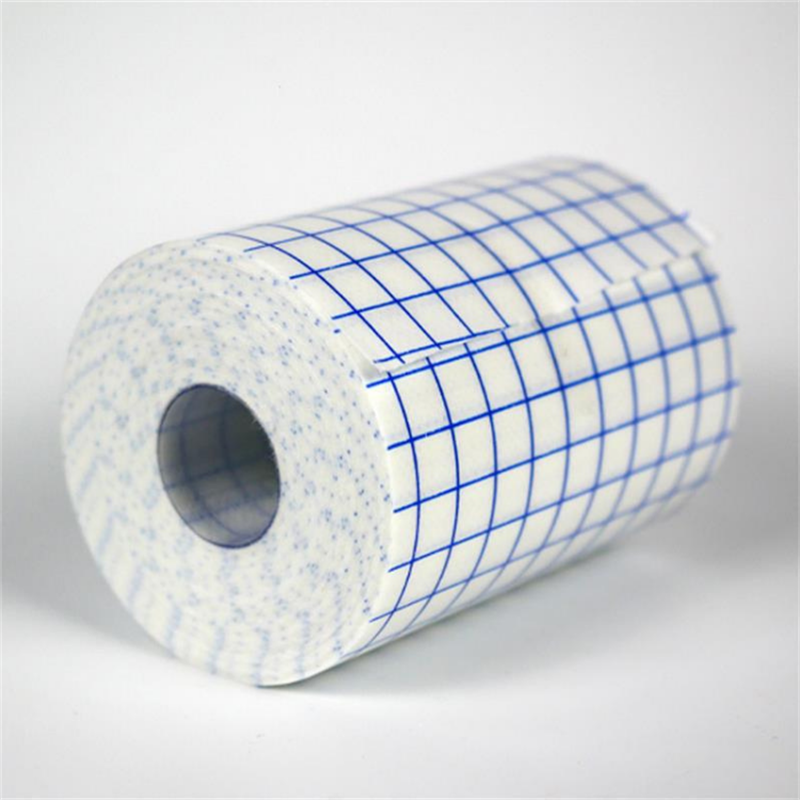 Non-Woven Medical Dressing Roll for Wound FixationBreathable micro-elastic non-woven roll with release-paper cutting squares, suitable for covering wounds or securing medical equipment, with customizable dimensions.View Product →
A specification that survives a factory audit carries values and tolerances, not descriptions. At minimum, it should cover the following.
Two items are often forgotten. The first is the release liner: peel force shifts with storage temperature and humidity, so a liner that behaves well in a European winter can be difficult to remove after a month in a tropical warehouse. The second is colour matching, which matters more than most buyers expect on skin-toned or decorative lines.
A manufacturer working to ISO 13485 normally inspects incoming material, in-process webs and finished goods against written criteria, supported by laboratory testing of physical and chemical properties. Where production runs in a controlled cleanroom environment, particulate counts and bioburden monitoring form part of the routine record.
Lead time depends far more on how custom the item is than on the quantity. The chart below reflects the ranges a vertically integrated dressing manufacturer commonly quotes.
Plan samples into the timeline rather than treating them as a formality. A ten-day sample run plus a two-week evaluation can consume a month before tooling even starts, and if the sample web is not the production web, the evaluation proves very little.
The phrase medical nonwoven dressing describes a family, not a fixed item. The performance buyers actually pay for lives in four decisions: how heavy the web is, how the fibres are bonded, what the fibres are made of, and how tightly those parameters are written into the purchase order. Get those four right and the rest of the supply conversation, from sample approval to container release, becomes straightforward.
For a first order, the sequence that works is unglamorous but reliable. Request the technical data sheet and a physical sample, test that sample against your own end-use criteria, then convert the winning parameters into a numbered specification with tolerances before any tooling is cut.
contact us
Don't hesitate to contact when you need us!

Contact Information
NO.3 Jinshui Road, Xiwu Street, Fenghua District, Ningbo, ZheJiang, China.
+86-18158557875





 English
 中文简体
中文简体
 русский
 Español