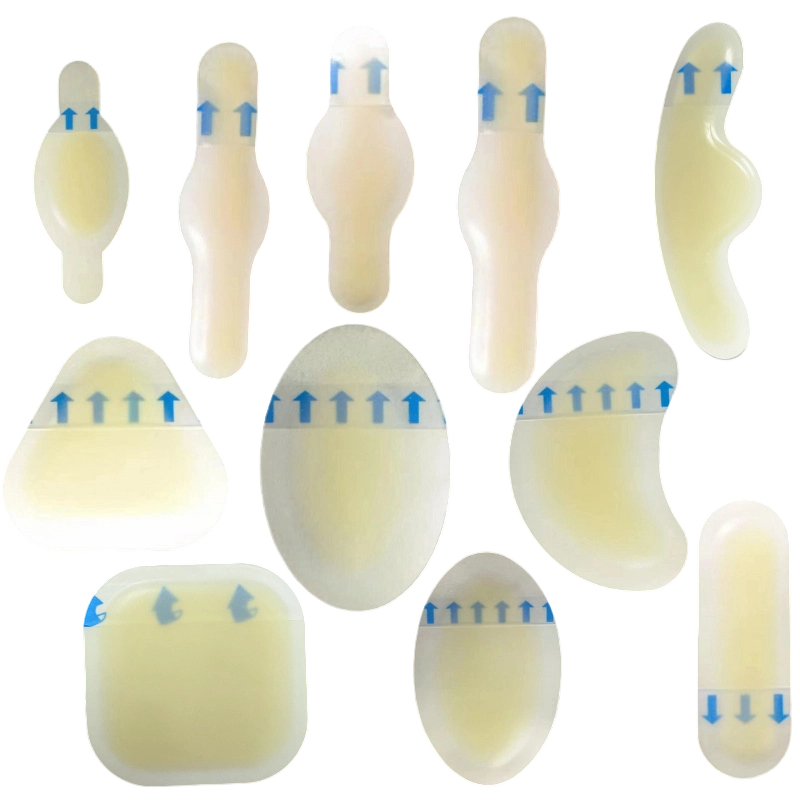
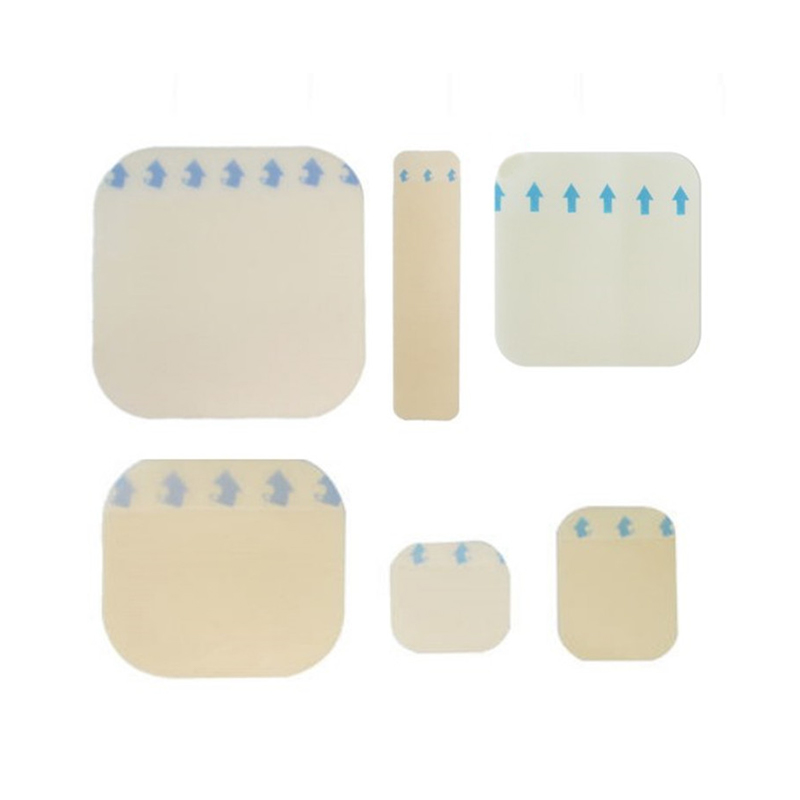
An 0.8 mm hydrocolloid dressing can pass a hand-feel test and still lift at the sacrum after two shifts. The difference is rarely the CMC gel alone; it is the match between thickness, adhesive tack, backing film, and the exudate the wound actually produces. The practical conclusion: choose hydrocolloid wound dressings by exudate level and body site first, then lock thickness, adhesion, size, and packaging with the supplier. A dressing that is too occlusive on a wet wound can macerate the surrounding skin; one that is too thin on a pressure-prone area can roll at the edges.
A hydrocolloid dressing is a flexible, self-adhesive sheet with gel-forming particles, usually carboxymethylcellulose, dispersed in an adhesive matrix and backed by a waterproof film. When it contacts wound fluid, the particles absorb water and swell into a soft gel. That gel supports moist wound healing, cushions the site, and creates a barrier against friction, urine, and feces. The backing film controls moisture vapor loss and resists liquid water from outside.
The clinical value is not that every wound heals faster. It is a controlled local environment: a moist bed, less trauma at dressing change, and fewer external contaminants. For a superficial cut, abrasion, or blister, that can be enough. For a heavily exuding cavity wound or a wound with spreading infection, a hydrocolloid can trap fluid and worsen the problem. The dressing is also not a substitute for debridement or systemic antibiotics when those are indicated.
The first screen is exudate. Dry to lightly exuding wounds suit thin hydrocolloids; moderate exudate suits standard thickness; heavy exudate usually needs an absorbent dressing or a different category. The second screen is site. Sacrum, heel, elbow, finger, and face have different curvature, shear, and contamination risks. The third is skin. Fragile or aged skin needs lower tack and gentler removal; hairy skin needs careful hair displacement; sweaty skin needs a backing that stays put without macerating.
Qualitative planning guide based on typical dressing geometry; confirm fit on the actual patient or product sample.
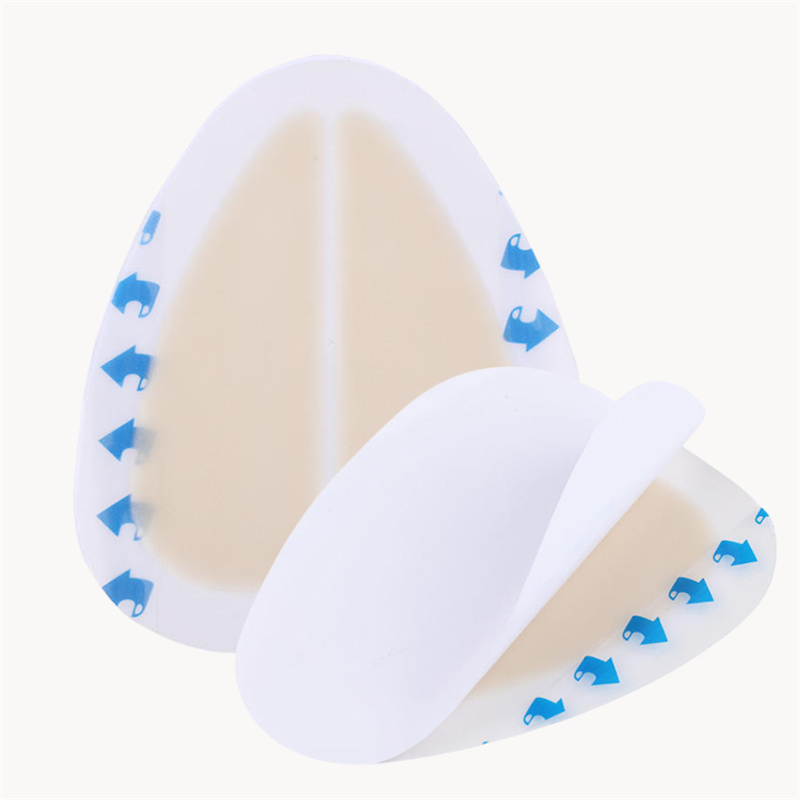
For a sacral pressure injury or postoperative site, a shaped sacral dressing reduces folds and edge lift compared with a square sheet.
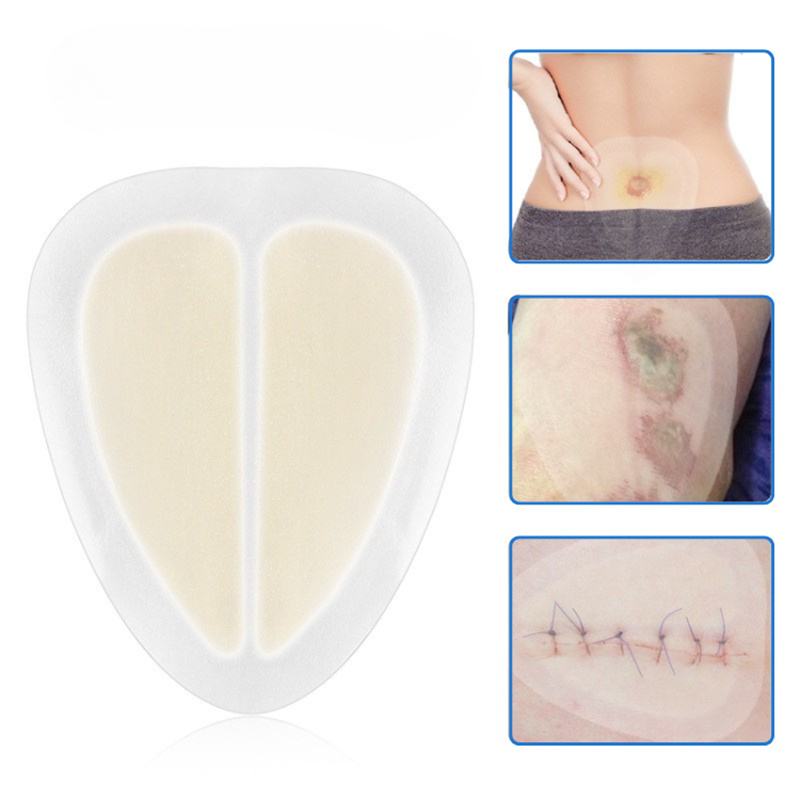 Shaped Sacral Hydrocolloid Dressing for Pressure Injury SitesCurved sacral dressing with hydrocolloid absorbent layer and wide adhesive edge, designed to reduce folds and protect fragile peri-sacral skin.View Product →
Thickness is a performance variable, not a cosmetic one. A thin dressing, often around 0.2–0.5 mm, conforms to fingers, facial contours, and fragile skin but holds less fluid. A standard dressing, often around 0.6–1.2 mm, gives more cushioning and absorption for the trunk, sacrum, and heel. These ranges vary by product design, so ask for the actual nominal thickness and tolerance.
Adhesion needs two tests: peel strength on steel and on a skin-like substrate, plus a shear test under warm, moist conditions. A useful production tolerance might be ±10% on thickness and ±1–2 mm on cut dimensions, but the right numbers depend on the product and test method. Also confirm shelf life, release liner force, and whether the dressing is sterile or non-sterile.
| Format | Typical site | Exudate fit | Procurement check |
|---|---|---|---|
| Thin, 0.2–0.5 mm | Fingers, face, fragile skin | Dry to light | Conformability, low-tack removal, edge lift |
| Standard, 0.6–1.2 mm | Trunk, elbow, small abrasion | Light to moderate | Cushioning, absorption, peel strength |
| Sacral shape | Sacrum, coccyx | Light to moderate | Anatomical fit, shear resistance, backing strength |
| Blister patch | Heel, toe, friction point | Light | Friction reduction, shape, adhesive residue |
For thin coverage where edge lift is a concern, an ultrathin hydrocolloid dressing can be a better starting point than a standard sheet.
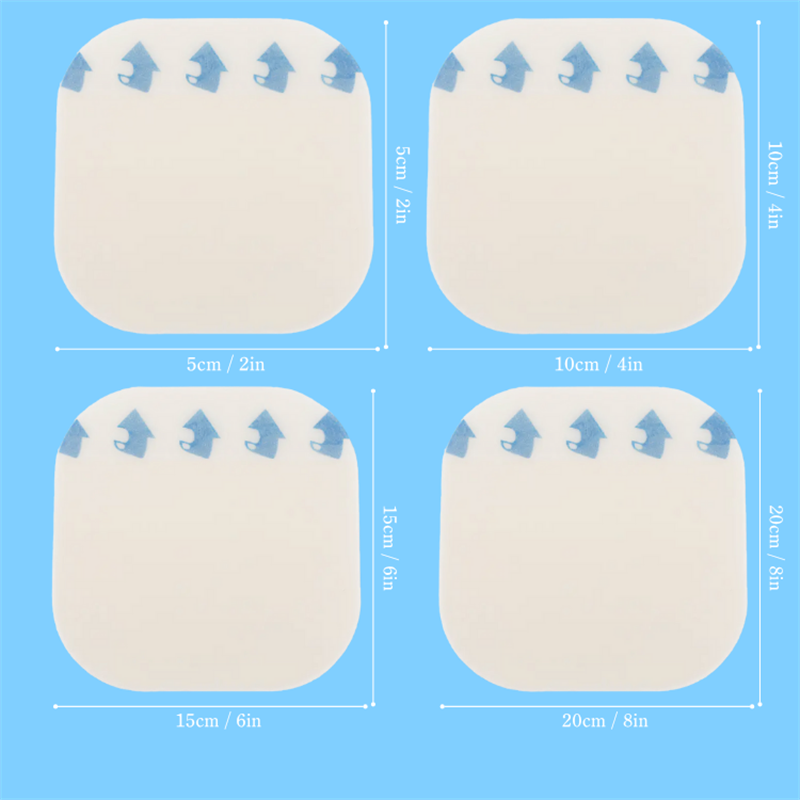 Ultra-Thin Hydrocolloid Dressing for Flexible Wound CoverageEdge-free, cuttable hydrocolloid sheet for superficial and irregular wounds where thin, conformable coverage and secure adhesion are needed.View Product →
A supplier’s certificate list is a starting point, not an audit. For hydrocolloid wound dressings, ask for ISO 13485 scope, CE/FDA documentation where applicable, bioburden and microbiological monitoring, heavy metal and biocompatibility reports, TRA/SVHC statements, and MSDS. If the product is sterile, confirm the sterilization method, validation, and dose audit. If non-sterile, confirm bioburden limits and packaging integrity.
Process control matters because hydrocolloid adhesive is sensitive to mixing, coating weight, drying, and lamination. Ask how incoming CMC and adhesive lots are verified, how coating weight is monitored, and how finished goods are sampled for peel strength, absorption, and dimensional accuracy. A 100,000-class cleanroom, or ISO Class 8, is useful for controlled production, but it does not replace lot-level testing.
For export programs, documentation discipline is part of the product. Confirm labeling language, lot traceability, certificate of analysis, change-control notification, and the shelf life remaining on arrival. Those details affect registration, warehouse rotation, and complaint handling more often than a brochure specification does.
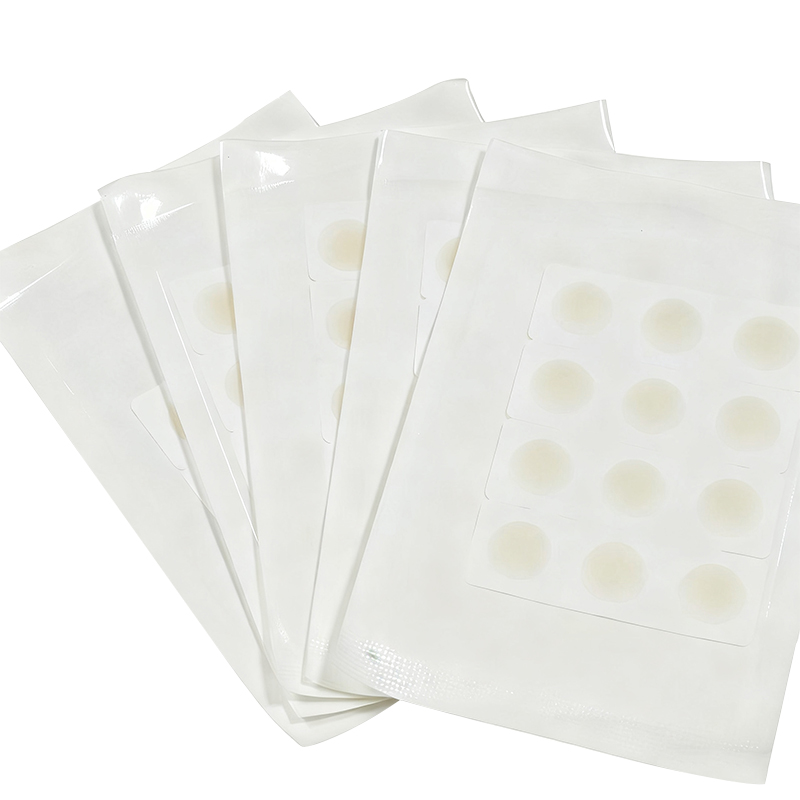
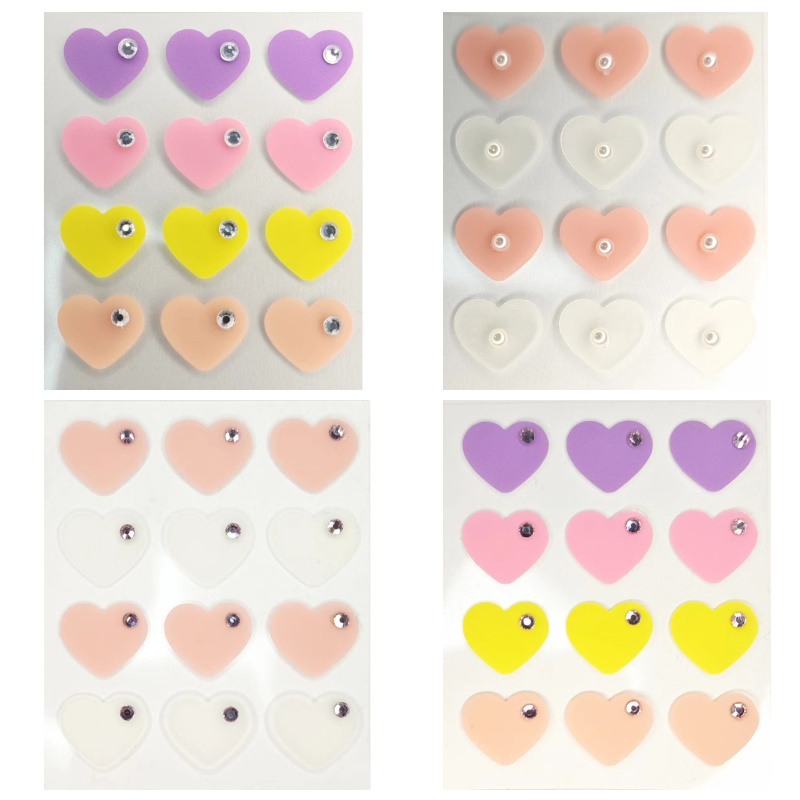
For custom projects, define the dressing by function before appearance: exudate level, body site, wear time, adhesion, and removal comfort. Then set shape, color, thickness, absorption, and packaging. Packaging choices such as paper-plastic pouches, foil pouches, or color boxes affect shelf life, line speed, and minimum order quantity.
A realistic timeline separates sample and production. Sample lead time is often 7–10 days; standard products may ship in 3–5 days; custom production may take 20–25 days after approval. Add time for artwork, regulatory review, and freight. If a supplier quotes a custom dressing faster than the sample can be validated, ask what is being skipped.
For blister-prone areas, a shaped hydrocolloid blister patch can reduce friction and edge lift compared with a trimmed square.
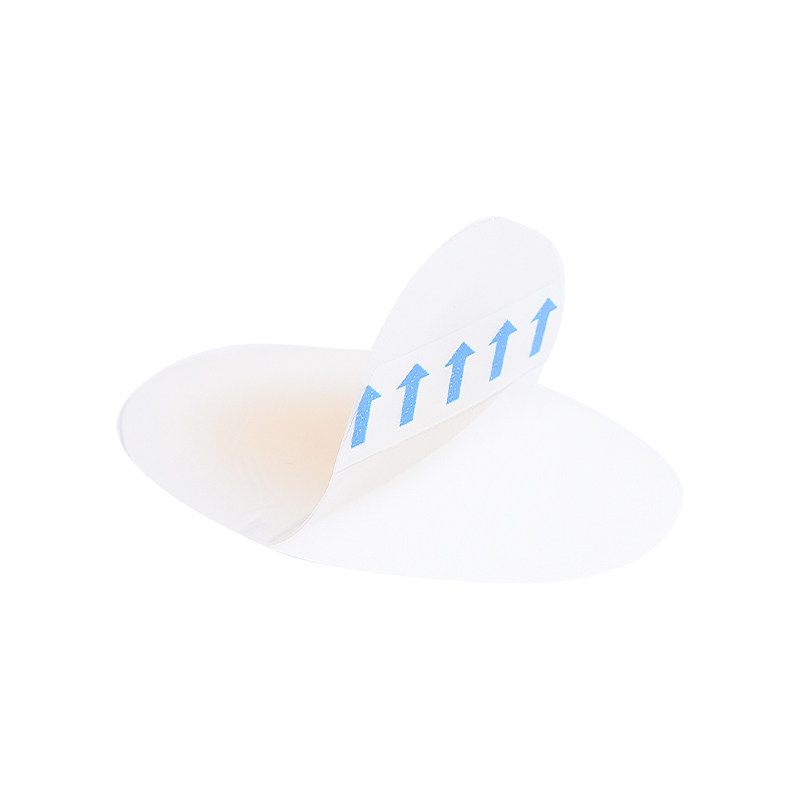 Shaped Hydrocolloid Blister Patch for Friction-Prone FeetWater-resistant, breathable hydrocolloid patch that conforms to foot contours; customizable shapes and sizes can help assess fit and cost per dressing day.View Product →
The cheapest dressing per piece can be the most expensive per application. Edge lift leads to early changes; aggressive adhesive leads to skin stripping; inconsistent coating leads to variable absorption and complaints. Calculate cost per dressing day, not cost per box. Include wastage, nursing time, and returns.
Supply risk includes single-source release liner, adhesive, or backing film; long lead times; shelf life remaining on arrival; and packaging that does not survive humidity. Ask for lot traceability, certificate of analysis, and a change-control agreement. For export, confirm labeling language, UDI or local requirements, and whether the supplier can support registration documents.
Start with the wound, not the catalog. If exudate is light and the site is curved, choose a thin conformable hydrocolloid. If exudate is moderate and the site is flat or pressure-prone, choose a standard or sacral shape. If friction is the main problem, choose a blister patch or low-friction format. Then verify thickness, adhesion, dimensions, sterility, and packaging against a written specification. A good hydrocolloid wound dressing is not the thickest or the stickiest; it is the one that stays in place for the intended wear time and comes off without taking skin with it.
contact us
Don't hesitate to contact when you need us!

Contact Information
NO.3 Jinshui Road, Xiwu Street, Fenghua District, Ningbo, ZheJiang, China.
+86-18158557875





 English
 中文简体
 русский
 Español